

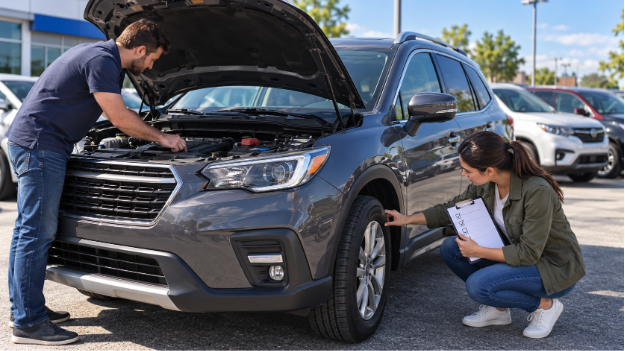
A used car can look spotless in photos and still have worn tires, hidden leaks, neglected maintenance, or repairs you would rather know about before signing anything.
You do not need to be a mechanic to spot many of those warning signs. You just need to know where to look.
This used car inspection checklist walks you through the vehicle in a practical order, from its history and exterior to the engine, cabin, and test drive. So you can ask better questions before making a decision.
Used Car Inspection Checklist at a Glance
If you need a quick used car checklist while viewing a vehicle, start here:
-
Confirm the VIN matches the vehicle and paperwork.
-
Review accident, title, and maintenance history.
-
Check for open safety recalls.
-
Inspect paint, body panels, glass, and rust.
-
Examine tire tread, condition, and wear patterns.
-
Look underneath for leaks or significant corrosion.
-
Check engine oil and visible fluid levels.
-
Start the engine and listen for unusual noises.
-
Test the lights, HVAC, windows, locks, and electronics.
-
Watch dashboard warning lights.
-
Drive at both lower and higher speeds where safe.
-
Test acceleration, steering, braking, and transmission response.
-
Look for vibration, pulling, clunks, or unusual noises.
-
Compare the vehicle's condition with its mileage and records.
-
Consider an independent pre-purchase inspection before committing.
Think of this as the first filter. If something does not look or feel right, investigate it rather than explaining it away.
Before You Inspect the Car: Check Its History First
Learning how to inspect a used car starts before you open the hood.
Write down the VIN and make sure it matches the number shown on the dashboard, driver's-side door area, and relevant paperwork. Then, review the available vehicle-history information and maintenance records.
Look for:
-
Accident or damage history
-
Title issues
-
Recorded mileage
-
Number of owners
-
Maintenance entries
-
Long gaps between records
-
Major repairs
A history report is useful, but it should support, not replace, a physical inspection. Not every repair or incident is necessarily reported.
You should also check for unrepaired safety recalls. The NHTSA recall lookup lets buyers search a VIN for applicable unrepaired recalls.
If you are still working through the broader purchase process, read this guide to buying a used car in Utah covers budgeting, financing, negotiations, and paperwork separately.
A Buyer's Checklist for Inspecting a Used Car
Once you have reviewed the vehicle's history, move through the physical inspection in a consistent order. This part of the used car inspection checklist covers the areas most buyers can evaluate themselves, including the exterior, tires, engine bay, interior, electronics, and road-test behavior.
Work through each area carefully rather than relying on the vehicle's overall appearance. Small inconsistencies can sometimes point to maintenance needs, previous repairs, or issues worth investigating further.
1. Inspect the Exterior and Body
Do your walk-around in good lighting whenever possible. Small dents, paint differences, and body repairs are much harder to identify in darkness.
Start several feet away from the vehicle. Look along the sides rather than only facing each panel directly. Reflections can make ripples and uneven bodywork easier to see.
Check for:
-
Dents and deep scratches
-
Rust or bubbling paint
-
Uneven gaps around doors, hood, or trunk
-
Paint that differs slightly between panels
-
Overspray around rubber seals or trim
-
Cracked or chipped glass
-
Damaged lights or lenses
Different paint or uneven panel spacing does not automatically make a vehicle a bad purchase. It may, however, indicate previous body repairs worth asking about.
Open every door, the hood, and the trunk. They should open, close, and latch normally.
Pay particular attention to corrosion around wheel wells, lower door edges, and underneath the body. For vehicles that have spent years on winter roads, the underbody deserves more than a passing glance.
2. Check the Tires, Wheels, and Visible Brake Condition
Tires reveal more about a vehicle than many buyers realize. Look at all four rather than checking whichever tire happens to be closest.
The tread should wear reasonably evenly across each tire. Heavy wear on one edge can point to an alignment, suspension, or tire-maintenance issue.
Check for:
-
Low tread
-
Cracks or dry rot
-
Bulges in the sidewall
-
Cuts or other damage
-
Uneven wear
-
Different tire sizes where they should match
-
Bent or heavily damaged wheels
On AWD vehicles, also pay attention to whether all four tires have similar size and tread condition. Significant differences can matter to some all-wheel-drive systems.
Look through the wheels at the brake rotors where visible. Light surface rust after a vehicle sits can be normal, but deeply scored or heavily worn components deserve closer attention.
Tires and brakes are wear items, so finding wear does not necessarily mean you should reject the car. It does mean you should understand what may need replacement soon.
3. Look Under the Vehicle
You do not need to crawl underneath a car or remove components to perform a useful inspection.
Simply look beneath it with a flashlight.
Check the pavement and visible underside for:
-
Oil or other fluid leaks
-
Significant rust
-
Loose or hanging components
-
Exhaust damage
-
Fresh-looking damage underneath
-
Greasy buildup around mechanical components
Remember that clear water underneath a vehicle after the air conditioner has been running can simply be condensation.
If you see an unidentified colored or oily fluid, however, ask where it is coming from and have it assessed before buying.
4. Inspect Under the Hood
Ideally, see the vehicle before it has been driven for the day. A cold start can reveal behavior that is less noticeable once an engine has warmed up.
Before starting it, look around the engine compartment.
Engine Oil
Check the oil according to the manufacturer's procedure. Oil color varies with use, so dark oil alone does not prove an engine has been neglected.
More important concerns include:
-
An extremely low level
-
Metallic particles
-
Milky contamination
-
Clear signs of leaking oil
Coolant and Other Fluids
Look at accessible reservoirs and check whether levels appear appropriate. Never open a pressurized cooling system while it is hot.
Very low fluids deserve an explanation because they may indicate neglected maintenance or a leak.
Battery
Check around the battery for obvious corrosion, loose connections, or physical damage.
Belts and Hoses
Visible rubber components should not be badly cracked, frayed, or deteriorated.
Then start the engine.
Listen for persistent knocking, loud tapping, grinding, or other unusual noises. Watch for warning lights and see whether the engine settles into a reasonably smooth idle.
A strange sound does not automatically identify the exact problem. It tells you the car deserves further diagnosis.
5. Test the Interior and Electronics
Mechanical components receive most of the attention when people ask what you should check when buying a used car, but modern vehicle electronics can also become expensive to repair.
Sit in every seating row where practical and test the equipment.
Check:
-
Power windows
-
Door locks
-
Mirrors
-
Headlights
-
Turn signals
-
Brake lights
-
Windshield wipers
-
Horn
-
Backup camera
-
Infotainment screen
-
Bluetooth or phone connectivity
-
USB ports
-
Power seats
-
Heated or ventilated seats, if equipped
-
Sunroof or moonroof
-
Air conditioning
-
Heater
Before starting the vehicle, observe the dashboard. Many warning lamps normally illuminate briefly when the ignition switches on and then turn off after the engine starts.
A warning light that remains on deserves investigation.
Also, use your nose. Persistent musty smells, damp carpeting, unexplained interior staining, or corrosion in unusual places can justify checking for past water intrusion.
6. Know How to Check Out a Used Car During the Test Drive
Never treat the test drive as a formality. Turn off the music for at least part of the drive so you can hear what the vehicle is doing.
When safe, test several types of driving.
Acceleration
Acceleration should feel reasonably smooth and predictable. Watch for hesitation, severe vibration, or unexpected loss of power.
Transmission
An automatic transmission should generally shift without severe slipping, banging, or prolonged hesitation. With a manual transmission, pay attention to clutch engagement and difficulty selecting gears.
Steering
On a straight, reasonably level road, notice whether the vehicle consistently pulls to one side. Also, check for excessive steering-wheel vibration or unusual looseness.
Braking
Apply the brakes normally and then somewhat more firmly when conditions allow.
Watch for:
-
Strong pulling
-
Grinding
-
Severe vibration
-
Unusual pedal feel
-
Excessive noise
Suspension
Drive over normal uneven pavement and listen for repeated clunks, rattles, or knocking.
Engine Temperature
Give the car enough time to reach normal operating temperature. Watch the temperature gauge and check for warning messages.
After the drive, look underneath and under the hood again. Heat and movement can sometimes make leaks or smells easier to notice.
7. Compare What You Found With the Records
The inspection and paperwork should tell a consistent story. For example, a vehicle showing moderate mileage but extreme wear on the driver's seat, pedals, and controls may deserve another look at its mileage history.
Likewise, if the seller says a major component was recently replaced, ask whether documentation is available.
The Federal Trade Commission advises consumers buying from dealers to obtain a vehicle history report and consider an independent inspection. Dealers generally must also provide a Buyer's Guide showing important warranty information, including whether the vehicle is being sold with warranty coverage or "as is."
Records are especially useful because they turn claims about maintenance into information you can verify.
When Should You Get a Professional Pre-Purchase Inspection?
A buyer's inspection has limits.
You can identify obvious wear, leaks, noises, and inconsistencies, but you cannot easily assess every internal engine, transmission, electrical, suspension, or structural issue in a parking lot.
A professional pre-purchase inspection is particularly valuable when:
-
The vehicle is older.
-
Mileage is high.
-
Service records are incomplete.
-
You notice unusual noises or leaks.
-
Previous accident repairs are visible.
-
The vehicle contains expensive or complex technology.
-
You are buying from a private seller.
-
You simply want another opinion before committing.
An inspection does not guarantee that a car will never need repairs. Its purpose is to give you better information about the vehicle's current condition.
Red Flags You Should Watch
As you inspect and test-drive a vehicle, some issues may stand out right away while others are easier to miss. The infographic below highlights common used car red flags and what they may indicate, so you can evaluate the vehicle more confidently.
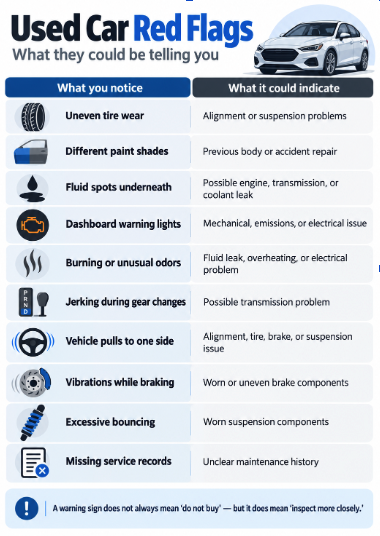
If you notice one or more of these warning signs, the next step is to clarify the vehicle’s history, maintenance, and repair status before making a decision.
Final Check Before You Make the Decision
Here is a practical checklist for buying a used car. Before agreeing to purchase, take five minutes and ask yourself:
-
Did the VIN and paperwork match?
-
Did you review the history and recall status?
-
Did anything look inconsistent with the stated mileage?
-
Are the tires and brakes likely to need replacement soon?
-
Did the engine start and run normally?
-
Did you test the major electronics?
-
Did the vehicle behave normally during the test drive?
-
Are there unexplained leaks, warning lights, or noises?
-
Do you understand the warranty or "as-is" terms?
-
Does anything still need a professional diagnosis?
If you cannot answer any of these questions confidently, resolve it before you buy, not afterward.
Inspect First, Decide Second
The idea of the used car inspection checklist is not about proving that a vehicle is perfect. Used vehicles naturally show age and wear.
Your goal is to understand what you are actually buying.
Follow the same inspection process each time, compare the condition with the records, pay attention during the test drive, and bring in a professional when something falls outside what you can confidently evaluate yourself.
That approach makes it much easier to separate ordinary used-car wear from a problem that could become an expensive surprise.
Frequently Asked Questions
Is a one-owner used car always better?
No. A one-owner vehicle can have excellent records, but ownership count alone does not determine condition. A multi-owner car with consistent maintenance may be a stronger purchase than a one-owner vehicle that was poorly serviced or heavily used.
How many miles are too many when buying a used car?
There is no universal mileage cutoff. Age, maintenance history, vehicle type, and how the miles were accumulated all matter. Higher-mileage vehicles with documented maintenance can sometimes be better candidates than lower-mileage cars with neglected service.
What does “as is” mean when buying a used car?
Generally, an "as is" sale means the dealer doesn't provide a warranty for covered repairs after purchase. Review the FTC Buyer's Guide and purchase documents carefully because warranty rules and consumer protections can vary by transaction and state.
Should you avoid a used rental or fleet vehicle?
Not automatically. Fleet and rental vehicles may accumulate mileage quickly but can also receive scheduled maintenance. Check their condition, service history, previous use, mileage, and inspection results rather than rejecting or choosing the car based only on former ownership.
Can you return a used car after buying it?
Do not assume you have three days to return a vehicle. The FTC notes that federal law does not require dealers to provide a three-day cancellation period. Return rights depend on applicable state law and the dealer's written return policy.
