

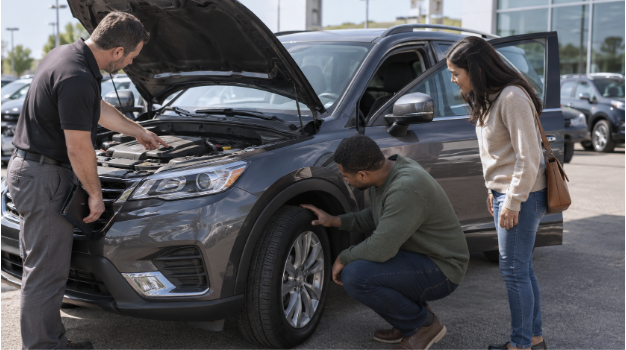
A high odometer reading does not automatically make a used vehicle a bad buy. The better question is whether the miles make sense for the car's age, maintenance history, current condition, and likely upcoming repairs.
Some high mileage used cars have years of useful life left, while lower-mileage vehicles can still hide neglect or unresolved damage.
Treat mileage as one clue, not the verdict. Review service records and vehicle history, inspect the mechanical condition, take a thorough test drive, and account for upcoming maintenance.
That gives you a clearer picture of value and used car reliability than the odometer alone.
What Counts as High Mileage on a Used Car?
There is no single mileage number that makes a car “too old” to buy. According to the Federal Highway Administration’s latest annual data, U.S. registered vehicles averaged 11,071 miles per vehicle in 2024. That provides useful context, but the average mileage on a car is not a pass-or-fail rule.
Used car mileage becomes meaningful when you compare it with age, ownership history, maintenance intervals, and condition. Frequent long trips can raise mileage quickly, while a low-mileage car may have spent long periods parked. Both create different maintenance questions.
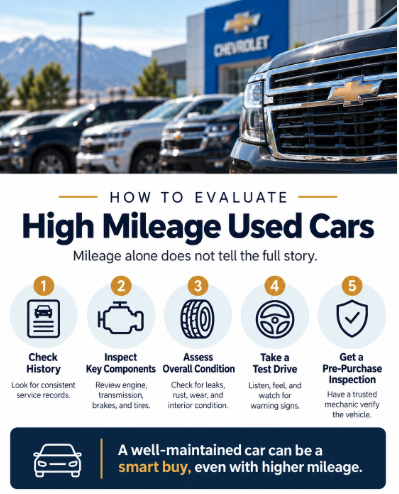
7 Things to Check Beyond the Odometer
Reliable used cars usually have a story that makes sense from the paperwork to the test drive. These seven checks help you see whether the condition supports the mileage shown.
1. Maintenance Records
Look for oil changes, fluid services, brake work, cooling system service, and major scheduled maintenance. Consistent records show that the previous owner addressed wear instead of simply adding miles.
2. Vehicle History and Mileage Consistency
Compare the odometer with title, inspection, and service records. NHTSA recommends checking for mileage inconsistencies, physical wear that does not match the displayed mileage, and vehicle-history discrepancies.
3. How the Vehicle Was Used
Ask whether most miles came from highway commuting, stop-and-go driving, towing, rideshare use, or work duty. The answer can help explain wear on brakes, suspension, cooling components, transmission, and the interior.
4. Engine and Transmission Behavior
Listen for unusual knocking, whining, delayed shifts, harsh engagement, smoke, warning lights, fluid leaks, or overheating. High mileage matters more when expensive systems are already showing symptoms.
5. Suspension, Steering, Brakes, and Tires
Wear items can turn a low purchase price into a large first-year bill. Uneven tire wear, vibration, clunks, steering pull, or brake pulsation deserve closer inspection.
6. Rust and Underbody Condition
Surface and structural corrosion are very different problems. Inspect frame areas, brake and fuel lines, suspension mounting points, rocker panels, and the underbody, especially on winter-driven vehicles.
7. Model-Specific Maintenance Milestones
Research the exact year, engine, transmission, and drivetrain. Timing belts, transmission services, differential fluids, coolant, and other major items may be due at different intervals. Used car reliability depends partly on whether those milestones are already completed or still ahead.
Use a Green-Yellow-Red Check Before You Buy
A simple decision table can keep one attractive feature—or one scary odometer number—from dominating the whole purchase decision.
What to Look for on the Test Drive
A test drive should do more than confirm that the car moves. If possible, start the vehicle when the engine is cold, because warm engines can hide hard-starting, noise, or idle problems.
Drive at neighborhood and highway speeds. Check smooth acceleration, transmission shifts, braking, steering response, and suspension noise. Test the air conditioning, heat, windows, cameras, infotainment, driver-assistance features, and every warning light you can verify. After the drive, look underneath for fresh leaks and smell for coolant, fuel, or burning oil.
The Federal Trade Commission recommends getting an independent mechanical inspection before buying a used vehicle, even when a vehicle has already been inspected or is being sold with warranty coverage. A written inspection report can also help you estimate near-term repair costs before agreeing on a price.
Judge the Price by the Next 12 Months, Not Just Today
A high-mileage vehicle can look inexpensive until you add tires, brakes, a battery, fluid services, suspension work, or a major scheduled service that is due soon. Before deciding, write down the purchase price and the maintenance you reasonably expect during the first year.
This is where used car mileage should influence price without becoming the only factor. If two similar vehicles are $3,000 apart but the cheaper one needs $2,500 of immediate work, the lower sticker price may not represent better value. Ask for repair estimates when the inspection identifies problems, then compare the total cost against lower-mileage alternatives.
When comparing high-mileage vehicles, focus on total first-year cost rather than the purchase price alone. A slightly higher-priced vehicle may offer better value if it needs fewer immediate repairs or major maintenance items.
Utah Buyers: Pay Extra Attention to These Areas
For Utah drivers, a high-mileage car may have seen winter roads, canyon grades, temperature swings, towing, and long interstate travel. Pay extra attention to underbody corrosion, brakes, tire condition, cooling-system health, suspension wear, and steady engine temperature on a longer drive.
For a truck or SUV that may have towed, ask how often and how heavily it was used. Inspect the hitch area. On four-wheel-drive vehicles, verify proper engagement and review transfer-case and differential service history when available.
When a High Mileage Car Can Be the Better Buy
High mileage used cars can make sense when the condition, documentation, and price all support the remaining life of the vehicle. A higher-mileage example may be worth serious consideration when it has consistent service records, a clean and logical history, no major mechanical symptoms, recent replacement of expensive wear items, and a price that leaves room in your budget for future maintenance.
By contrast, a low odometer reading should not automatically make a vehicle more attractive. Age-related maintenance still matters, and years of irregular use can create battery, tire, fluid, seal, and corrosion concerns. The goal is not to find the fewest miles. It is to find reliable used cars whose condition and history justify the price.
Know When to Walk Away
Do not let a low price turn obvious problems into acceptable risk. Pause or walk away when the seller cannot explain major mileage inconsistencies, refuses an independent inspection, or the vehicle shows overheating, heavy smoke, serious transmission problems, structural rust, multiple warning lights, or poorly repaired collision damage.
Also use the VIN to check for open safety recalls through NHTSA's recall lookup. Recall status is separate from routine maintenance, but it belongs in a complete pre-purchase check.
Look for Evidence, Not Just a Number
The odometer is useful, but it cannot tell you whether oil changes were skipped, whether the transmission shifts correctly, whether the brakes are nearly finished, or whether the vehicle has been cared for consistently.
The best high mileage used cars are the ones whose mileage, maintenance history, physical condition, test drive, inspection, and price all tell the same story.
Evaluate the complete vehicle, budget for age- and mileage-related maintenance, and walk away when the evidence does not add up. A lower odometer reading does not automatically mean a better car.
FAQs About High Mileage Used Cars
Is 100,000 miles too much for a used car?
Not by itself. Many modern vehicles can continue well beyond 100,000 miles when maintained correctly. At that point, focus more closely on service history, major maintenance already completed, current mechanical condition, and whether the price reflects upcoming repairs.
How much mileage is too much on a used car?
There is no universal cutoff. A vehicle with 150,000 miles and strong records may be a better purchase than one with 80,000 miles and poor maintenance. Judge mileage relative to age, vehicle type, use, condition, and the cost of repairs that may be due soon.
Can high-mileage cars still be reliable?
Yes, but high mileage increases the importance of documentation and inspection. Used car reliability is strongest when the vehicle has a proven maintenance history, no major unresolved mechanical issues, and model-specific service has been completed on time.
What matters more: age or mileage?
Neither should be used alone. Age can affect rubber, seals, fluids, electronics, corrosion, and tires even when a car is driven very little. Mileage adds wear to mechanical systems. The best evaluation considers both, then lets condition and records break the tie.
